

What Building 33 Websites Taught Me About How Service Providers Should Structure Their Booking Page
In the last year, I have personally built 33 websites, and one of the most consistent patterns I have noticed is how often the booking page gets overlooked.
It is usually not part of the redesign conversation in a meaningful way. Most of the attention goes to the homepage or the services page, while the booking page is set up quickly at the end and rarely revisited after that.
What ends up happening is that it functions in the background without much intention behind it, even though it plays a vital role in how someone moves from interest to actually booking a call.
And across all of the sites I have worked on, I have seen two main ways service providers structure this page, and the approach they choose often shows up in the quality of leads they attract and how those sales conversations go.
Why You Should Be Paying More Attention to Your Booking Page
Most service-based business owners set up their booking page quickly and move on.
They either embed a calendar on a page with little context or they create a form without putting much thought into what they are asking or why.
And since people are still booking calls, it feels like it is doing its job. But it is more than a place to schedule a call.
This is where someone decides to actually take the next step, and how you structure this page can shape the entire experience that follows.
When it is set up with intention, it can help you attract better-fit clients, feel more prepared going into calls, and spend your time more efficiently.
Structure One: The Lead Form or Application
The first option is a lead form or application, which is exactly what it sounds like. Instead of booking a call right away, someone fills out a form with strategic questions, and you review their answers before inviting them to your calendar.
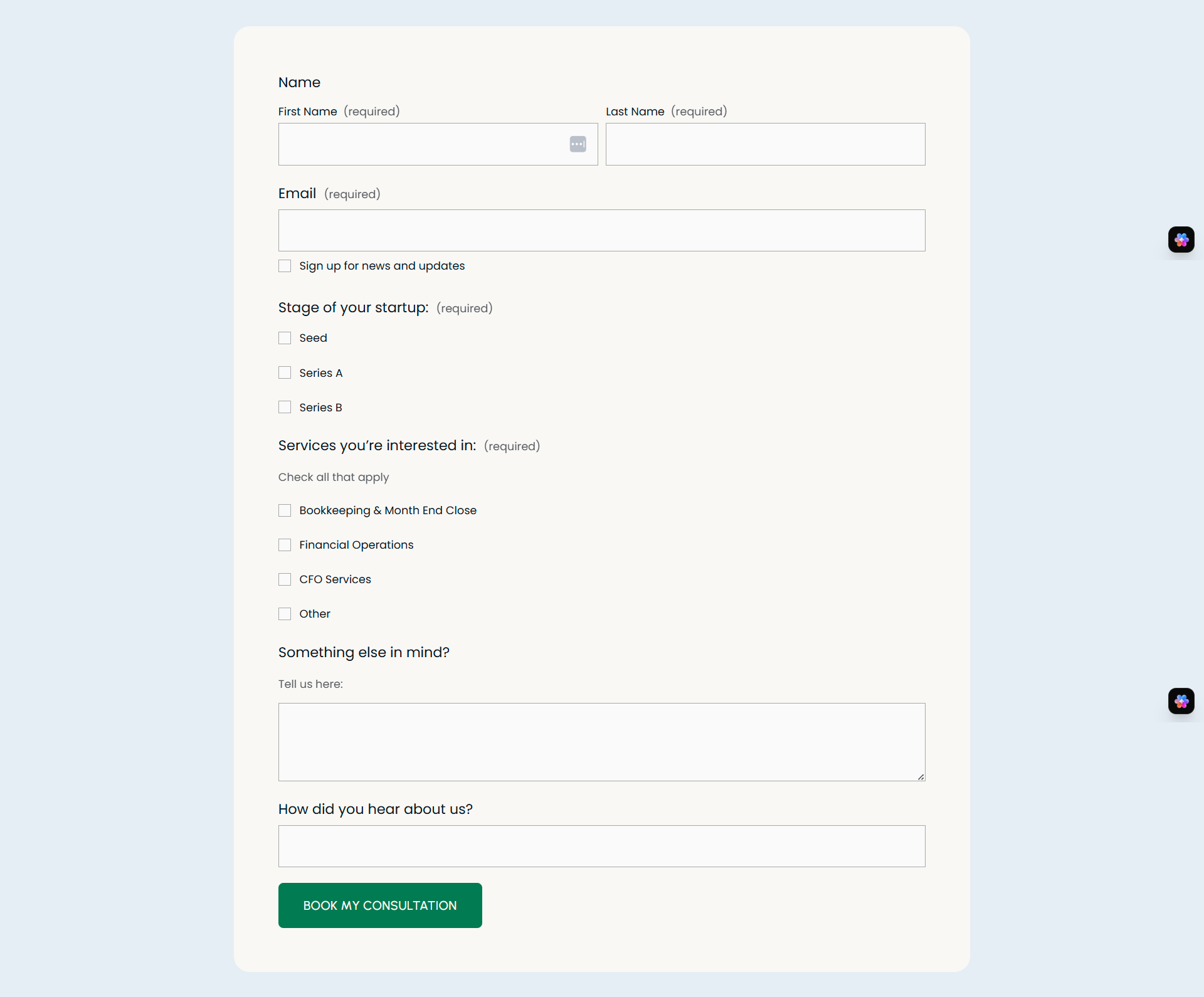
This approach gives you a chance to understand who they are, what they are looking for, and whether they are actually a good fit before you commit to a 30-minute conversation.
This tends to work really well for business owners who are short on time or who offer higher investment services where getting on the wrong-fit calls can feel especially costly. Instead of spending your time sorting that out live on a call, you are able to filter that upfront and be more intentional about who you move forward with.
It also means that when you do get on a call, you are walking in with context, which makes the conversation feel more focused and productive on both sides.
You can set this up using something simple like a Squarespace form, or take it a step further with a CRM like Dubsado or HoneyBook.
The CRM option is especially helpful if you want to automate what happens after someone applies, which can save you even more time behind the scenes and create a smoother experience overall.
Structure Two: The Embedded Calendar with an Intake Form
The second option is an embedded calendar with a short intake form, which is slowly becoming a top way people inquire.
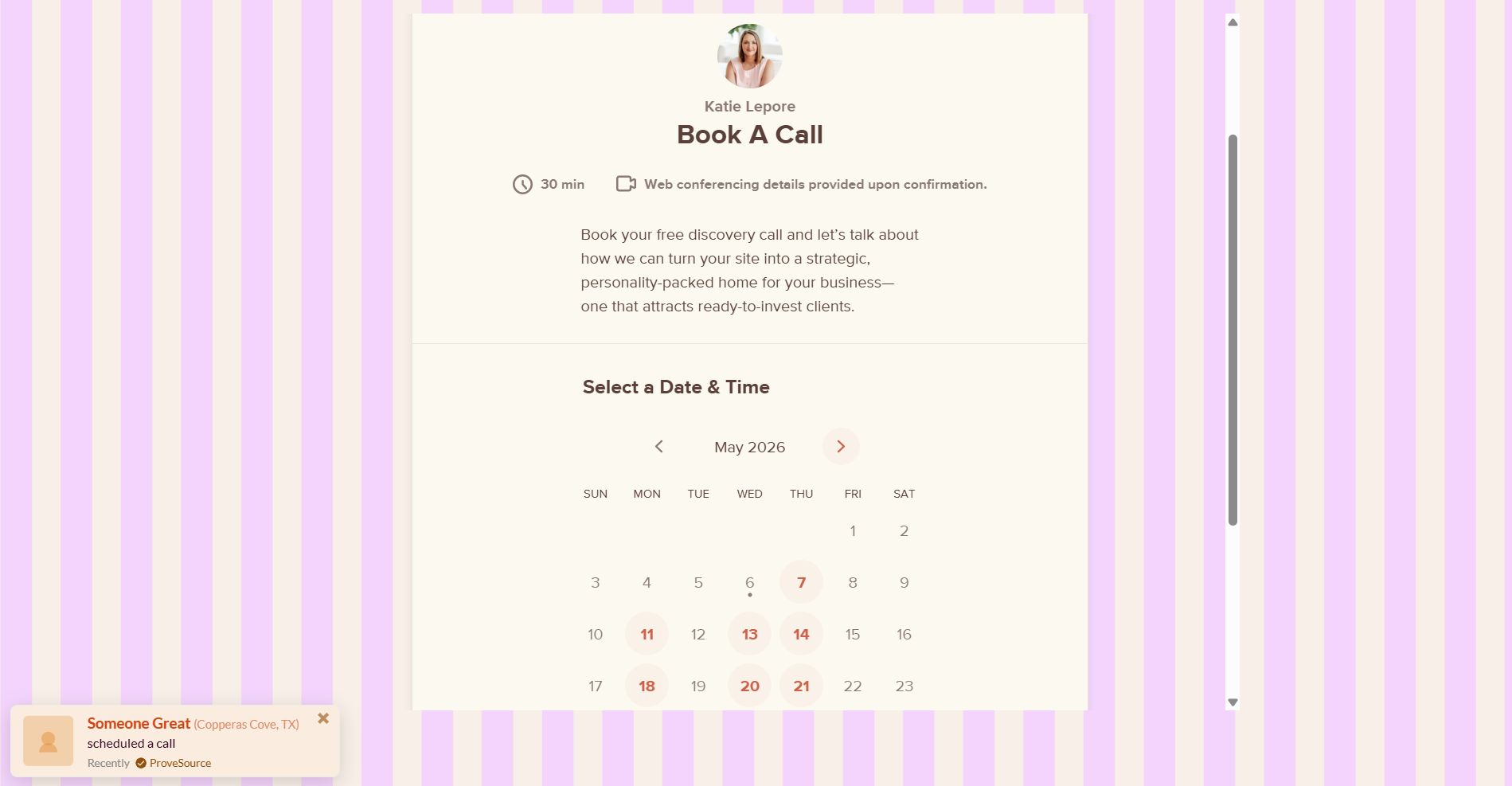
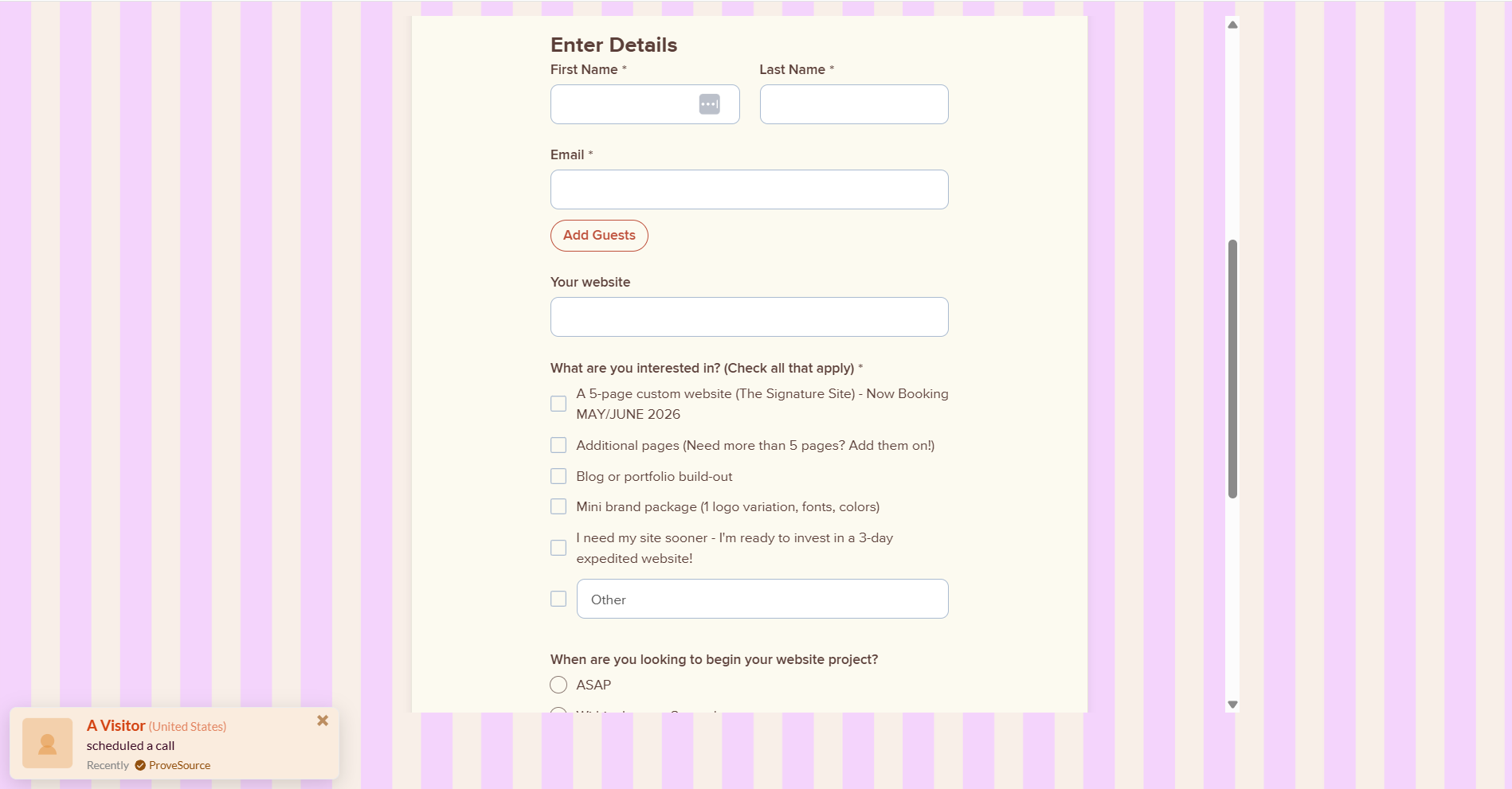
Instead of submitting a form and waiting to hear back, someone can land on your booking page, answer a few quick questions, and choose a time on your calendar right away.
It is a more direct path, and for many business owners, it feels simple and easy to manage.
This approach works especially well if you want to reduce friction and make it as easy as possible for someone to take the next step.
It is also a strong fit if you feel confident on sales calls and know that once someone is in a conversation with you, you can guide them in the right direction.
Because the barrier to entry is lower, this structure often leads to more bookings, and it allows people to move forward while their interest is still high.
Tools like Calendly, Acuity Scheduling, and TidyCal make this easy to set up, and the added intake form still gives you a bit of context before the call so you are not walking in completely blind.
How to Know Which Booking Page Structure Is Right for Your Website
It is easy to wonder which option is better, but that is not really the right question. Both of these structures work. The better question is which one fits your business right now.
Take a minute to think through where your business is in this season.
How much time do I realistically have for calls right now?
Do I need to be filtering leads more carefully?
Am I confident on sales calls?
Do I want more control over who books or do I want people to book quickly?
Your answers here will point you in the right direction.
→ If your time is limited or your offers require a higher level of alignment, a lead form or application will likely serve you better.
→ If you want to make booking feel easy and move people into conversations quickly, an embedded calendar is usually the better fit.
There is no one right answer here, just the option that supports how you want to run your business.
Bonus: The Thank You Page Most People Are Not Using
There is one more piece of this process that almost no one is using to its full potential, and that is the thank you page.
After someone submits a form or books a call, they either stay on the same page and question whether or not the inquiry went through or they are taken to a simple page that says something quick like “thanks, we will be in touch,” and then the experience just ends there.
But this is a really valuable moment because you already have their attention and they have just taken action, which means they are thinking about working with you. Instead of letting that moment go to waste, you can use this page to continue building trust and helping them feel more prepared for what comes next.
One of the best ways to do that is with a short horizontal video that walks them through what to expect, explains your process, and helps them understand how working together will feel. This is also a good place to touch on pricing in a general way so there are no surprises later.
[insert example of what this might look like]
The goal is that by the time they show up to your call, they feel informed, comfortable, and ready to move forward because of the trust and value you built there.
We will be sharing a full blog all about thank you pages in June, so keep an eye out for that because this is one of the most overlooked opportunities in a service-based website.
Want a Clearer View of How Your Website is Working?
Overall, your booking page is not something you set once and forget.
It should reflect how you best operate in your business right now, while you take the time to assess where people are falling off from taking the next step.
When this page is set up with intention, it can lead to better conversations, more aligned clients, and a smoother overall process.
If this post made you think differently about your booking page, it may be worth looking at your website as a whole system rather than individual pages.
Most business owners never actually step back and look at how someone moves through their website from first click to inquiry, so things like your booking page end up being set up in isolation instead of as part of a larger journey.
That is exactly why I created the Conversion Map for Established Female Service Providers. It gives you a simple way to see how each part of your website connects, so you can understand where people are flowing through easily and where they might be dropping off.
You can download it and use it to map out your own site, so you can make more intentional decisions about what to adjust next and how to better support the way you want your business to grow.
