

The Most Overlooked Page On Your Website (That Can Increase Conversions)
Most service providers spend a lot of time thinking about the pages people see first. Your homepage, services page, contact page, and the dreaded about page usually get the most attention because they feel like the pages that matter most.
But there is one page that often gets completely overlooked, even though it shows up at a very important moment in the customer journey.
The thank you page.
In many cases, business owners do not even realize they have one. Someone fills out a contact form, books a call, or downloads a free resource, and what happens next is usually something very small like, “Thanks! Check your inbox.”
And that’s where the experience ends, even though that person is still fully engaged.
Most business owners spend so much time trying to get someone to click the button that they never stop to think about what happens after the click.
A thank you page gives you the opportunity to answer questions, build trust, and help someone take their next step while they are still paying attention.
Why Thank You Pages on Your Website Matter
Think about how much effort goes into getting someone to fill out a form in the first place.
They find your website, read your content, then decide they trust you enough to click, submit, or book. That process can take seconds or sometimes much longer depending on how they found you.
And then, once they finally take action, the response is often minimal.
It is a little like inviting someone over for dinner, opening the front door, and then immediately saying goodbye.
A thank you page does not need to be complicated, but it should give them clarity on what happens next instead of leaving them guessing.
This is also something that shows up in other parts of your website journey. I recently talked about this in a post about what I learned after building 33 websites, including how often the booking page is overlooked despite playing a major role in helping visitors move from interest to action.
Not All Thank You Pages Have The Same Job
One of the reasons thank you pages are often overlooked is because people tend to think of them as one-size-fits-all.
But someone who downloads a free resource is in a very different place than someone who just booked a discovery call. They have different questions, different expectations, and different levels of commitment.
That is why it helps to view thank you pages as separate tools rather than a single page you reuse for everything.
Each one plays a slightly different role, and once you understand that, it becomes much easier to decide what belongs on each page.
The 3 Types of Thank You Pages Service Providers Need
Thank You Page #1: After Someone Downloads A Freebie
This is the simplest thank you page on a website. It does not necessarily need a video, though one is never a bad idea.
A strong freebie thank you page starts with a simple, warm message that actually feels human instead of generic or automated. From there, the goal is to make the next step really clear so someone is not left wondering what happens now.
Most of the time, that simply looks like telling them to check their inbox and making sure they know exactly what to look for. It might feel small, but it directly impacts whether they actually open what you sent or move on without it.
It also helps to set expectations for what comes next. If they are about to receive a welcome sequence or a few follow-up emails, tell them. Let them know what to expect and why it matters. When people know what to look for, they are far more likely to open those emails, pay attention to them, and stay engaged.
And if your freebie is attracting the right audience, this is also a really natural place to introduce a next step.
For example, when I launched my Conversion Map freebie, I included an option for people to book a quick website audit. Some people downloaded the resource and booked a call immediately because they were ready for more support. Others downloaded it and continued through the email sequence first.
Both paths work.
The thank you page simply allows me to nurture my ideal clients two ways rather than forcing everyone down the same path.
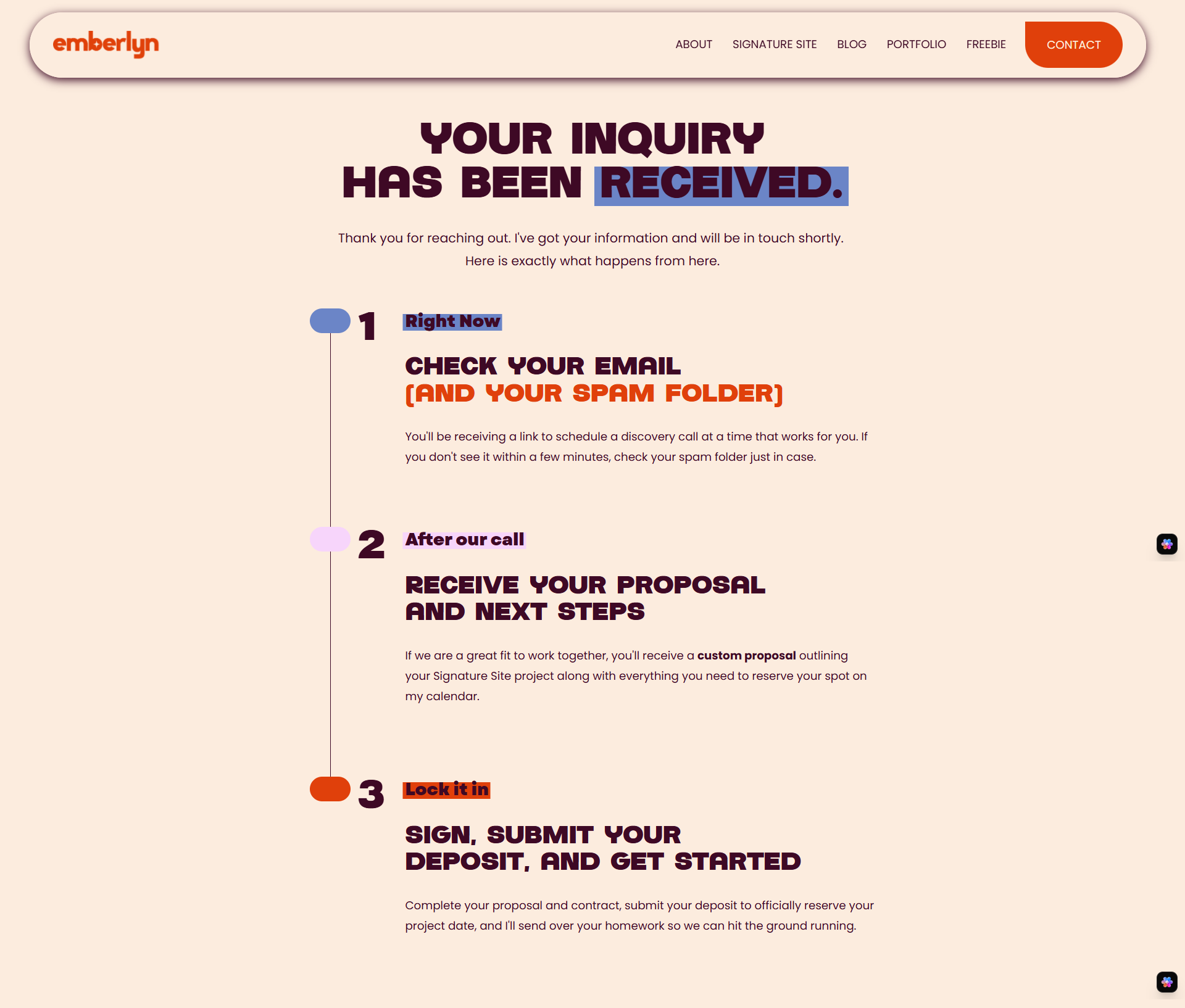
Thank You Page #2: After Someone Submits A Contact Form
If there is one thank you page I think every service provider should have, it is this one.
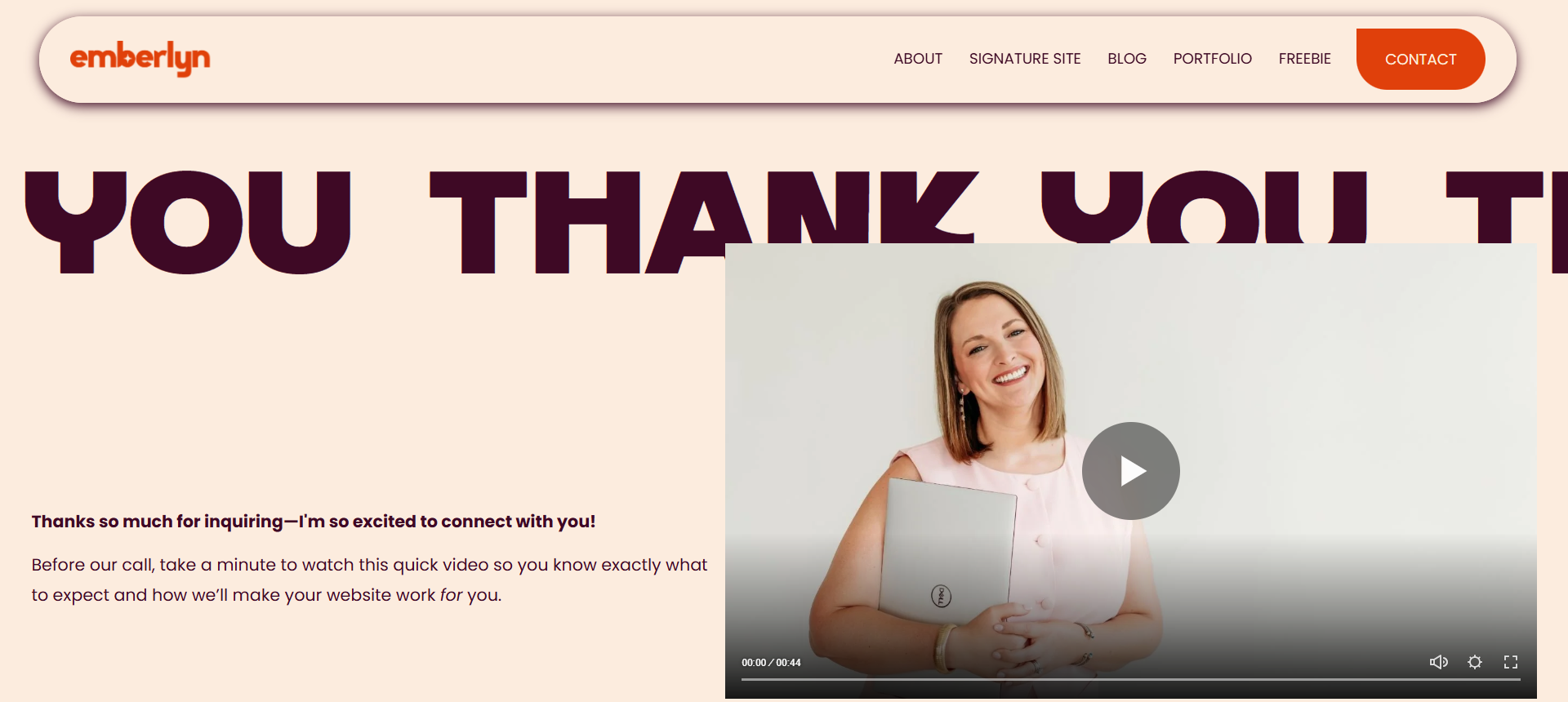
When someone submits a contact form, they usually have a lot of unanswered questions. They are wondering whether the form went through, how long it will take to hear back, and what the process looks like from here.
A short video can answer all of those questions in less than a minute.
It does not need to be polished or fancy, it just needs to feel real and clear. In fact, I think simple is often better. A quick video thanking them for reaching out and walking them through what happens next can make the entire experience feel much more personal while building trust before you ever speak to them.
Underneath the video, I also recommend including a simple "what happens next" section.
Something like:
I'll review your inquiry.
You'll hear from me within 24 hours.
We'll schedule a call if we're a good fit.
Many people will watch the video. Others will skip straight to the bullet points. Giving them both options makes the page work for different types of people.
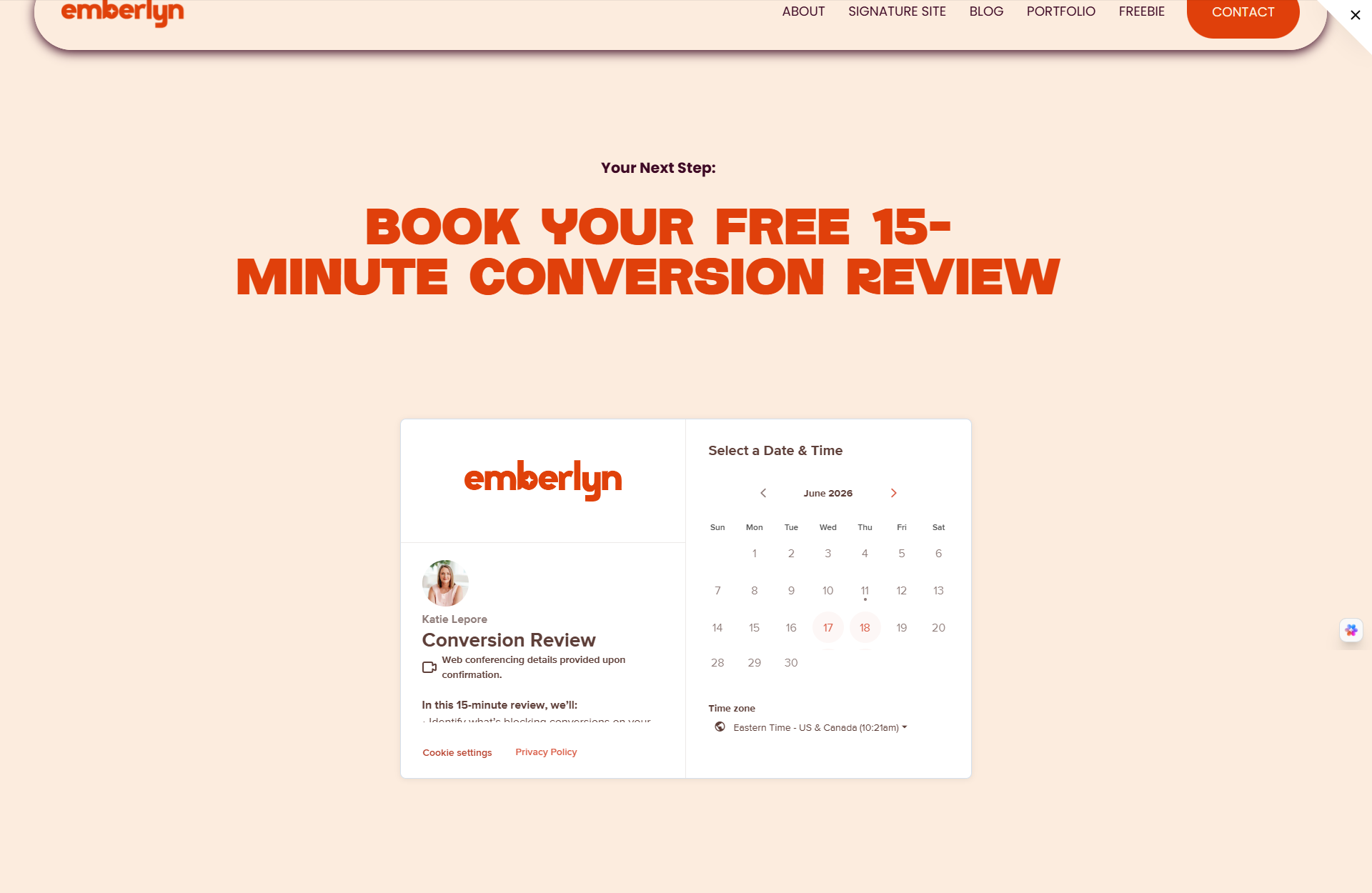
Thank You Page #3: After Someone Books A Call
Someone who books a call is in a different mindset than someone filling out a contact form.
At this point, they have already committed to a conversation with you. They are not wondering whether they should reach out. They already did.
Now they are probably wondering what the call will be like.
This is another place where a short video can do a lot of heavy lifting. Use it to set the tone, introduce yourself, explain what you will cover during the call, and if there is anything they need to prepare beforehand.
This is not about selling them on working with you.
You want them showing up to the call feeling prepared, confident, and excited to talk with you.
A lot of people feel nervous before discovery calls, especially if they have never worked with someone in your industry before. A little reassurance can go a long way toward helping them feel prepared and excited for the conversation.
Website Thank You Pages Can Do More Than Most People Realize
While these are the three thank you pages I think most service providers should focus on first, they can be useful in other ways too.
For example, thank you pages can help track conversions if you decide to run paid ads in the future. They can also give you better insight into what is actually working on your website and which marketing efforts are bringing in results.
And while that is a bigger conversation for another day, it is one of those behind-the-scenes pieces that can completely change how you measure what is actually working on your site.
Take A Look At What Happens After Someone Clicks Submit
If you have never really looked at your website thank you pages before, you are not alone. Most business owners are focused on getting people to the next step, whether that is the form, the booking link, or the free download itself, and they rarely pause to think about what happens right after someone says yes.
This is usually where you discover whether your website is continuing the conversation or accidentally ending it. So instead of thinking about what you still need to add to your website, take a look at what happens after someone takes action.
Is there a clear next step? Are you answering the questions they are already thinking about? Or are you ending the experience right when someone is most engaged?
Instead of moving past it, take a minute to look at your own website and ask yourself:
→ Do you have a thank you page for your freebie downloads, your contact form submissions, and your booked calls, or are some of those missing entirely?
Then go one step further.
→ Which one of those is missing, and what is one small change you could realistically make this week to improve it, even if it is something as simple as adding clearer next steps or a short message that sets expectations?
You do not need to rebuild everything to make this work better. You just need to start using the space you already have with a little more intention.
And if you are starting to realize your website might not be guiding people as clearly as it could, the Conversion Map for Established Home Service Providers will walk you through how to structure your site so it actually supports the decisions your visitors are already trying to make, instead of leaving them to piece it together themselves.
